
Detour
Departure from a familiar way

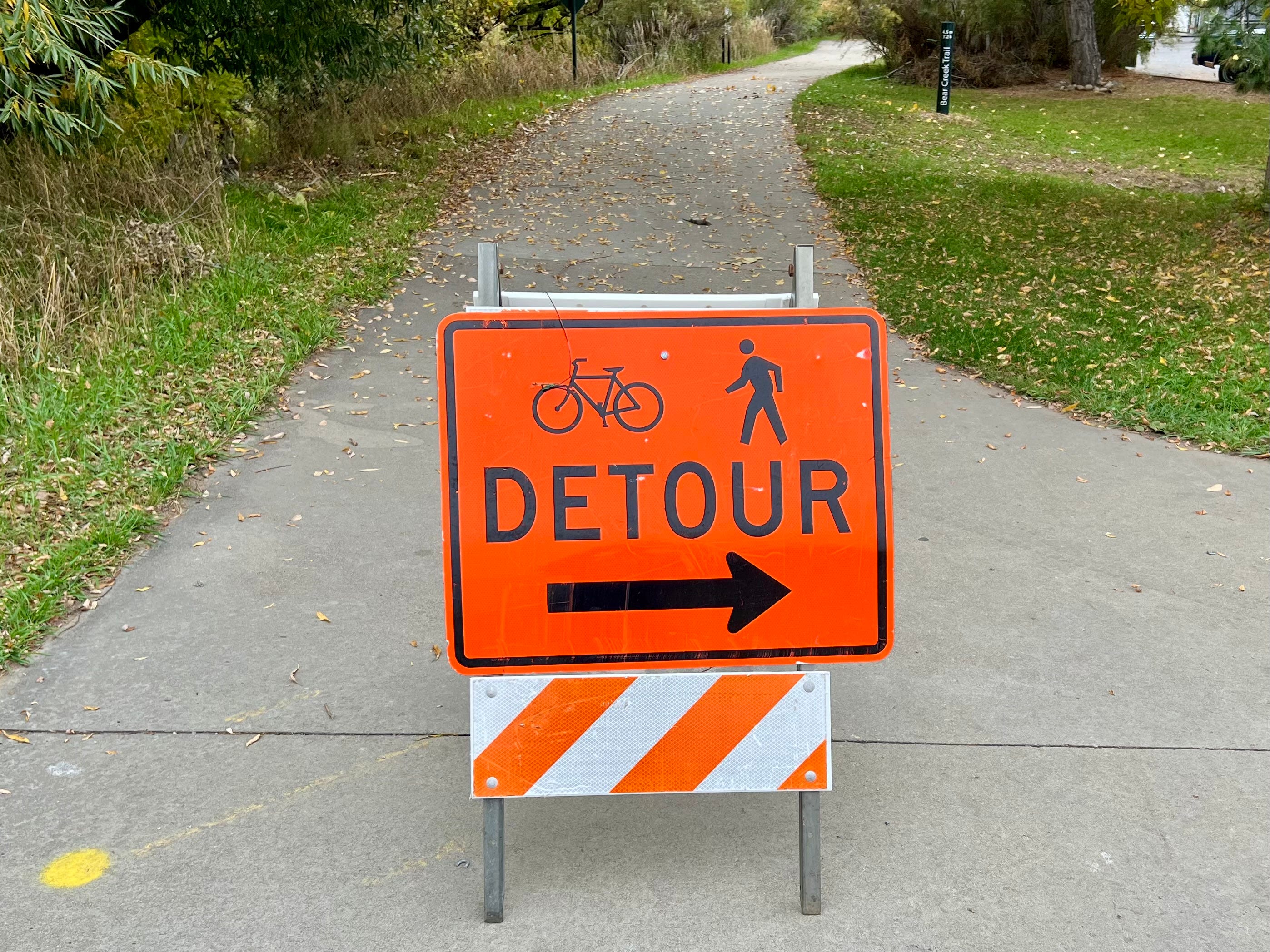
Bear Creek Trail, Jefferson and Denver Counties, Colorado. Photograph by the author, 10 October 2025.
It was my favorite time of year. Fall had arrived, the temperature was cool, and trees were beginning to display their golden splendor. Perfect weather for an outdoor run. Halfway through my familiar route, I passed under the Sheridan Street bridge and rounded the curve toward Bear Creek, only to find an unsuspected obstacle. There, in the middle of my running path was an orange and black sign, appropriately colored for Halloween. “Detour,” it commanded. What now? Do I turn around or take the detour? And where will it lead?
As I was pondering this choice, a childhood memory burst into my brain. Linguists and editors would note that the adjective is technically incorrect. I had recently turned 18, could vote, be drafted, even purchase alcohol. Linguistically and legally I was no longer a child. But it’s how I categorize this memory. I had not yet left my childhood home—maybe that’s why this recollection sits in my memory library on the childhood shelf. The long-forgotten images and intense emotions that unexpectedly came to me had occurred during a time in-between my childhood and adulthood. This latent memory was of an event when I faced the uncertainties of departure from a familiar way.
I had graduated from high school, the summer was over, and I was leaving home to go to college. I was at my house, in my room, packing the last few items to take to my freshman dorm room at Southern Methodist University in Dallas. Though measurably only 30 miles away, in reality it was an incomprehensible distance.
My family had moved to this house when I was eight years old. My parents had built it especially to accommodate their children: three rooms on the second floor, one for each boy, with a bathroom at the end of the hall. The shower was large, two of us could fit in together, which sometimes happened after a grueling track practice. My brothers and I each had our own room, with a built-in desk, bookcases above, and a dormer that faced the front yard and street. For the past 10 years, my room is where I had studied, read all the Hardy Boys mystery novels, and talked by phone with my girlfriend late at night. When I was tired, or angry, or upset, I retreated to my room, a place where I felt safe and loved, where I could always find comfort and peace.
Now I was leaving this room, going away to college—to live in another space with other people. I was excited about my upcoming college life. I would learn new things, meet new people, expand my vision beyond those of my conservative, Christian upbringing. But as I was packing to leave the intimacy and familiarity of my room I had other thoughts. What will college life really be like? Is it going to be better than the life I have here now? And when I need it, where will I find peace and a comforting space?
My mother entered unexpectedly, interrupting my worried thoughts. She said she had come to help me pack, but what she wanted was to say goodbye in the privacy of my room. My dad and brothers were downstairs, waiting to see me off and wish me well in my new adventure.
“Well, it looks like you’re packed,” she said.
“Yeah, I think I’ve got everything,” I replied.
She gazed about my room. Pictures of Scouting events hung on the wall, track trophies and mystery novels rested on the bookshelf over my desk, and shirtless hangers filled the now empty closet.
“You know, Rush, when you come back home, this room will always be ready for you,” she said wistfully.
I avoided her mournful eyes. Recalling memories of my room, and how much I loved that space and loved my family, I suddenly blurted out the naked truth, “Mother, you can do whatever you want with my room, I’m never going to live here again.” Though spoken without malice or defiance, these words wounded us both.
Then she was crying and I was crying, an embarrassing expression of emotions, but validating my feelings and the gravity of that occasion. We hugged a long time. It was the most intimate moment I had experienced with my mother, neither of us given to demonstrations of affection. Finally she pulled away, brushed a moist hand from her face, and smiled, “I guess it’s okay for you to leave now.”
I gathered my things and left my room, a familiar place of comfort and love, and began the journey of my adult life, an unfamiliar path of new ideas, wonders, and friendships, the start of an awesome adventure. The harsh words that I had uttered to my mother turned out to be true. I never lived in that room again. During college I spent every summer living on campus, working and taking classes. And after graduation, I lived in a Dallas apartment and worked for a few months before moving to another state, beginning medical school and eventually marrying. My youngest brother, the fourth family boy, born when I was a junior in high school, inherited my room, and adorned it with his own pictures, books and sporting trophies.
Contemplating this bittersweet memory, I smiled at the orange and black sign and decided not to turn around. I’ll follow the detour—after all, I’d taken one before. Then I left my familiar path and resumed my run in a different direction, eager to explore a new route.
The more love and affection we feel in our family, the harder it is to push ourselves away into our independent adult lives--but it's something we're required to do. Your comment to your sweet mother made perfect sense to me.